Digital art and graphic design are interrelated fields with different applications and procedures. They have since evolved from being just tools for artists and individuals to express themselves and communicate with others. They both serve different purposes and are used by various people. Let’s analyse the differences and similarities between digital art vs graphic design and their tools, positions, and principles.
Here is your guide to help you choose the best option!
What is Graphic Design?
Graphic design is the process of designing objects through graphics to convey specific messages. Graphic designers use typography and pictures according to users’ requirements, concentrating on how elements are placed and organised in interactive designs. The main objective of graphic design is to convey a message, starting with transforming the target audience, typically done for profit-making.
These range from developing logos, brochures, ads, websites, and other graphic materials to marketing products, services, or concepts.
Tools and Principles of Graphic Design
Tools of Graphic Design:
- Software: Some commonly used software are Adobe Photoshop, Adobe Illustrator, Adobe InDesign, and Correl Draw. By these tools, we mean software that enables the creation and editing of vectors and rasters, the development of typography, and the preparation of layouts, which are necessary for any design.
- Physical Tools: Although computer software and programs are the most popular tools, most designers start by drawing on paper with pencils, markers, and sketchbooks. They act as the middle link between conventional and digital technologies, as the designer can use tablets to draw directly into the design software.
Principles of Graphic Design:
- Balance: This, in a sense, means spreading the visual stress balance in a specific design to attain stability. Mirroring elements is how symmetrical balance fulfils this, whereas contrast creates the element of intrigue.
- Contrast: It means applying opposites, such as different colours, forms, and sizes, to attract the guests and make them focus on a particular object.
- Hierarchy: Helping the viewer’s eye follow a design by making some elements bigger, colour or other parts of the design that contain less information.
- Alignment: Aligning the textual content and graphics under a given pattern or grid makes it easier to create a coherent pattern on the face of the designing program.
- Repetition: The concept of repetition is when some features, including colours, shapes, or fonts, are repeated to strengthen the design theme.
Unleash Creativity with Icenfire Media’s Expert Graphic Design Services – Elevate Your Brand with Stunning Visuals! Get Started Today!
What is Digital Art?
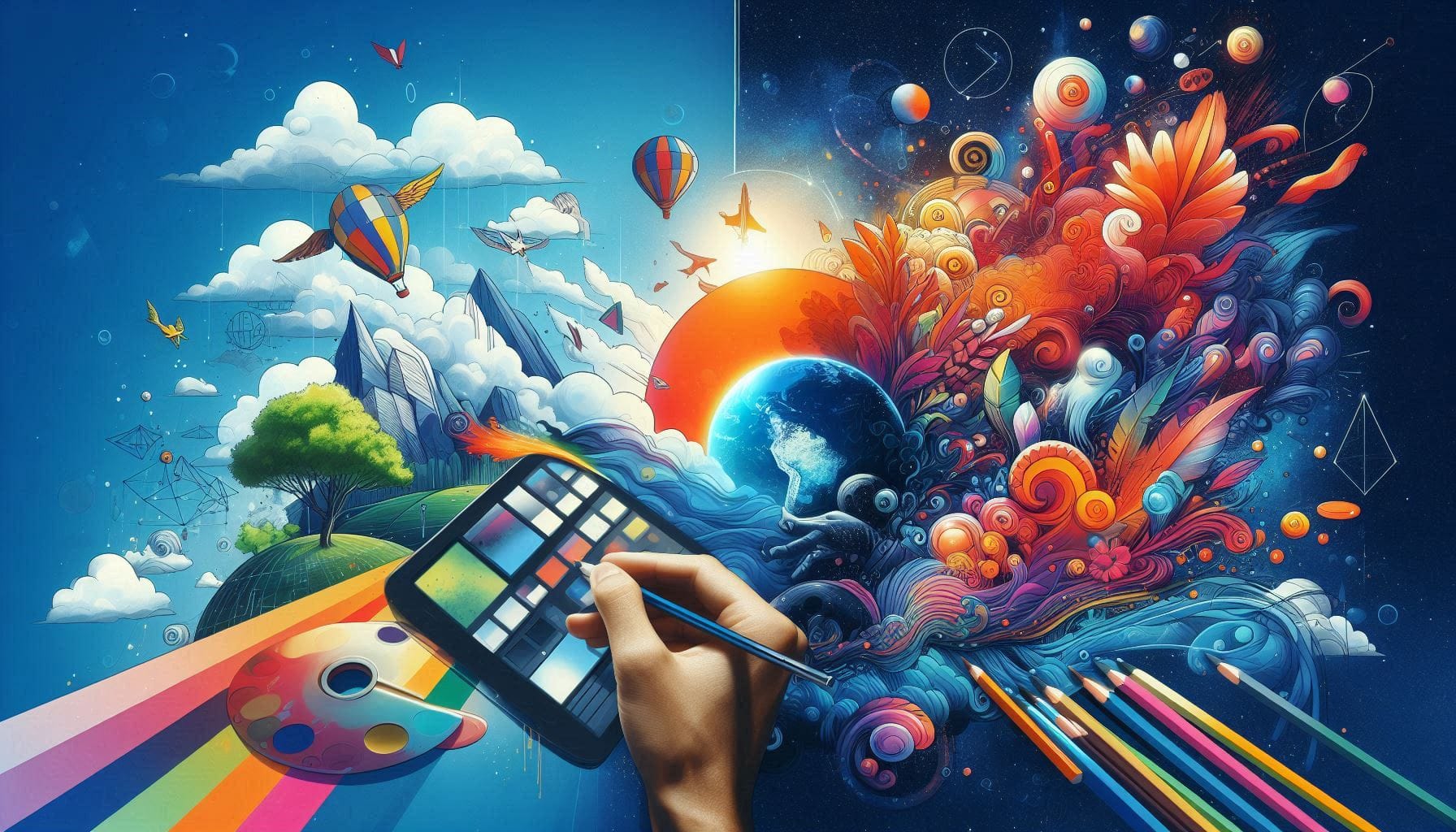
Digital art is when at least one aspect of the work uses digital technology as part of its artistic execution. Graphic design is more confined to problem-solving and more concerned with communicating visually and for specific goals and purposes, while digital art is more art and creativity-oriented.
Digitised art means digital art, which can be digital painting, 3D modelling, animations, or digital installations. Artists prefer to engage with emotions, abstract thinking, and creative inspiration without having to deal with commercial aims and objectives.
Tools of Digital Art:
- Drawing Tablets and Pen Displays: Devices like Wacom tablets let an artist draw directly on a screen, and the experience is not much different from drawing on paper.
- Graphic Design Software: Freeware tools include Adobe Photoshop and Illustrator, which are also crucial for making illustrations and paintings in digital art.
- Vector Graphics Software: Graphic applications such as Adobe Illustrator produce vector digital art perfect for small details and enlargements.
- 3D Modeling Software: Blender and Maya allow artists to build and sculpt three-dimensional artworks and animations.
- Digital Painting Software: Software such as Corel Painter and Krita is preferred for emulating the effect of actual art materials in digital art.
- Animation Software: Tools such as Toon Boom, Blender and Adobe Animate are essential for animating any digital art piece in features, short films, video games or any other form of interactivity.
- Photo Editing Software: Adobe Photoshop continues to be essential for artists because it enables more complicated actions in photo manipulation and editing.
- 3D Rendering Software: V-Ray and Octane Render are some of the tools that enable the conversion of 3D models into representations of real-life works of art, giving depth to digital art.
- Digital Cameras and Scanners: They capture high-quality images and textures that can be included in the artwork.
- Online Platforms and Tablets: Mobile devices like the iPad and versatile software like Procreate have made creating digital art more accessible.
What Does a Digital Artist Do?
To briefly describe the ideas digital artists deal with, the latter works on visual images that can be used for entertainment, media, and art, among other things. Their work includes digital paintings, illustrations, concept art, character design, VFX for movies, or even art installations.
Digital artists use their artistic talents to create innovative ideas and practice their art in animation, gaming, advertising, and other fields.
Digital Art vs Graphic Design: A Comparison
Focus and Purpose:
The central area in which digital art and graphic design departs is their concentration. Digital art mainly focuses on one’s creativity, emotion, and response, and the subject matter may sometimes be abstract or imaginary. Graphic design, on the other hand, is closely related to the actual appearance or style through which ideas are enunciated, which is more centred on passing specific messages and can be viewed as the process of using visuals to solve problems.
Interpretation:
Digital art forms allow less restrictive interpretation. They often explore intricate issues and concepts, leaving lots of creative space. Graphic design, however, can be considered more formulaic and prescribed since it is an assignment based on client briefs and created for a specific audience.
Purpose and Audience:
Digital art is mainly made for artistic purposes and is accessible to anyone who wishes to see it. It caters to a different audience, ranging from individuals to art lovers. Graphic design is more focused and purposely intended to convey specific messages or market products and services to a well-defined public.
Styles and Techniques:
Digital art, as a category, contains any style and method, from digital drawings and photorealistic portraits to 3D and complete abstraction of the artwork. Most graphic design, on the other hand, uses more conventional techniques and approaches, closely following the common guidelines for practical design.
Collaboration:
Graphic design often entails collaborating with other professionals like copywriters, marketers, and clients to achieve set goals and objectives. Digital artists may work more independently as their work revolves around the concept or idea they are trying to portray or work collectively as a team when working on a large project involving several artists.
Similarities Between Digital Art and Graphic Design
Despite their differences, digital art and graphic design share several vital similarities:
- Digital Medium: They rely on computers and computer-like devices for their creation and thus interface seamlessly with a variety of media, including print, web-based, and virtual.
- Visual Creativity: There are apparent similarities between the designs of these two fields.
- Digital Tools: Many software most commonly utilised in digital art and graphic design share similarities, such as elements like Adobe Photoshop and Adobe Illustrator.
- Composition: Both must consider composition aesthetics, including balance and alignment, as well as other elements like hierarchy.
- Colour Theory: In both fields, colour theory is imperative to expressing the emotion that should be expressed and developing a harmonic sight.
- Attention to Detail: Sustainability and sharpness are specific in digital artistry and graphic design, the last detail in painting or the esthetic arrangement of textual content and pictures into designs.
Qualifications Needed to Become a Graphic Designer and Digital Artist
To pursue a career in graphic design or digital art, you typically need a combination of education, experience, and a strong portfolio:
- Education: Educational qualifications include a degree in graphic design, fine arts, or any related field of study. Digital media, typography, colour theory, art history, and art courses are helpful in creating a good base.
- Portfolio: Portfolios are must-haves for both graphic designers and digital artists. They prove your skills, imagination, and versatility. Build a comprehensive portfolio showing different projects you have worked on.
- Technical Skills: Specific practical competencies include a working knowledge of the Adobe Creative Suite and an awareness of the particular technologies that define the medium.
- Creative Skills: Etiquette, perception, a unique thinking process, extraordinary visualisation skills, and thinking beyond the box/notion are critical in both fields.
- Soft Skills: Good communication, teamwork, empathy, knowing how to articulate yourself, and problem-solving skills are valuable in both these professions. When you converse with clients or other creative professionals, they count the most.
Conclusion
Digital art and graphic design are different in terms of their intention and focus. Yet, both are fundamental concepts regarding originality and communication in today’s visual environment. Digital art is a vast canvas for self-fulfilment, where they get to experiment with new methods and forms of expression freely. Graphic design, on the other hand, is more formalised in that it is used to communicate particular messages and to solve visual communication issues that may be marketing-related.
They are closely connected by invocating the same tools and a call for creative talents to further the discipline. Still, they are aimed at different audiences with the performance of other functions. In addition, appreciating the differences helps to define the potential of each of the industries and guides designers to choose the best direction for their creative pursuits. Hence, the two major fields – digital art and graphic designing – will not fade away but will continually transform hand in hand with the advancement of technology and, hence, are the future of Visual art.
Need any help with your projects? Contact IceNFire today and get a chance to get the best possible output from our graphic designers and artists. We help you with the ideation, creation, and what serves your project in the best possible way.
FAQs: Frequently Asked Questions
- What is the fundamental differentiation between digital art and graphic design?
The primary difference is their focus: whereas digital art is centred on aesthetic creations, graphic designs focus on communications goals and objectives.
- Can graphic designers be digital artists?
Of course, graphic designers can also become digital artists since the main competencies of these two professions are very similar.
- What software is commonly used in digital art and graphic design?
Contemporary software used in creating digital art and graphic design includes Adobe Photoshop, Adobe Illustrator, Corel Painters, and Blender, to name but a few.
- Is formal education a mandate to become a digital artist or graphic designer?
It is better when you have been through school, and although it may offer core skills to its attendees, many graphic designers and digital artists are freelancers and learn through their own experience.
- Which field has more career opportunities, digital art or graphic design?
Numerous career prospects are available in both fields. Graphic design may encompass more sensible references in the marketing and advertising sector, while digital art has openings in the entertainment, media, and arts sectors.