The Evolution of Branding in 2025
The landscape of branding in 2025 has been transformed by technological advancements, shifting consumer preferences, and a growing emphasis on personalization and sustainability. In an era where digital-first strategies dominate, brands have adapted by focusing on interactive engagement, AI-driven marketing, and ethical branding initiatives. This blog explores the best branding campaigns of 2025, delving into top brand marketing strategies 2025 and providing insights into successful branding case studies that have set industry benchmarks.
Key Trends That Defined Branding in 2025
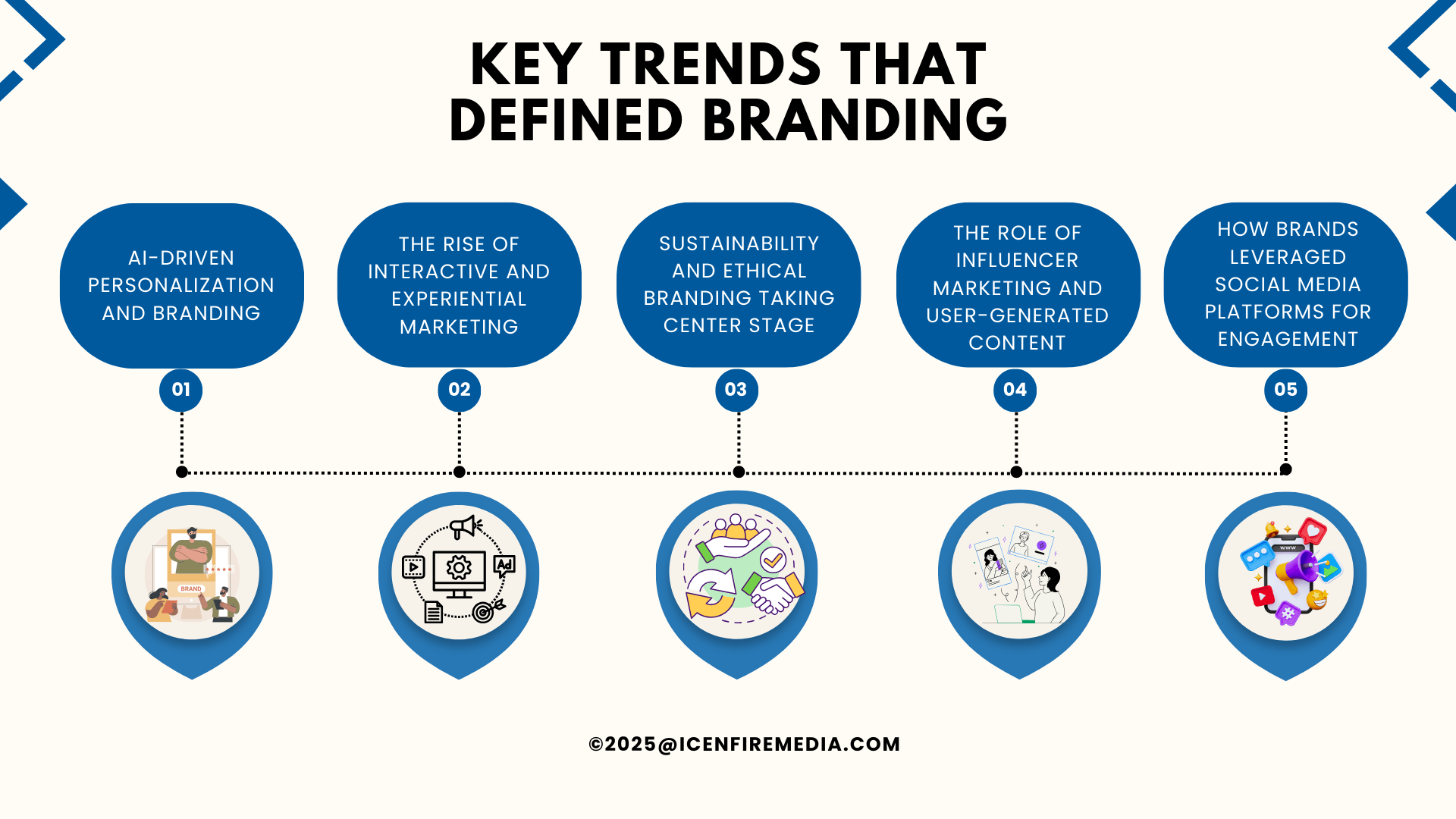
Branding in 2025 has been a dynamic landscape, shaped by innovation and consumer-centric strategies. Companies have explored new avenues to create meaningful connections with their audiences, focusing on personalization, immersive experiences, and value-driven branding. Below, we delve into the key trends that have redefined the branding world.
1. AI-Driven Personalization and Branding
One of the standout trends of 2025 is AI-driven personalization, a transformative approach that uses data analytics to understand consumer behavior deeply. Companies like Netflix and Amazon have leveraged AI-powered recommendation engines to offer tailored experiences, enhancing customer engagement and satisfaction. AI algorithms enable brands to predict preferences, customize marketing messages, and create products that resonate on an individual level. For example, personalized shopping experiences, curated playlists, and even customized advertising content have become the norm. This data-driven strategy ensures that brands remain relevant in an increasingly competitive marketplace while fostering strong emotional connections with their customers.
2. The Rise of Interactive and Experiential Marketing
2025 has also witnessed the rise of interactive and experiential marketing, with companies embracing augmented reality (AR) and virtual reality (VR) technologies. These tools have opened up new possibilities for brands to create immersive experiences, turning customers into active participants rather than passive observers. A prime example is Coca-Cola’s award-winning marketing campaigns, which utilized AR to provide customers with engaging digital interactions. By incorporating AR into packaging or retail spaces, brands have successfully increased brand loyalty and sales, delivering memorable experiences that stand out in a crowded market. Events, product launches, and virtual try-ons have also benefited from this trend, making marketing campaigns more impactful and shareable.
3. Sustainability and Ethical Branding Taking Center Stage
In 2025, sustainability has become a cornerstone of branding strategies. Ethical sourcing, carbon neutrality, and eco-friendly initiatives have moved from being mere add-ons to becoming essential aspects of a brand’s identity. Companies like Nike and Patagonia have led the charge, aligning their products and campaigns with consumers’ growing environmental and ethical concerns. Sustainability is no longer just a corporate responsibility but a powerful differentiator that drives consumer loyalty. Customers now expect brands to take meaningful action on global issues, including reducing their carbon footprint, adopting circular economies, and promoting fair trade practices.
4. The Role of Influencer Marketing and User-Generated Content
The branding landscape of 2025 has also been defined by influencer marketing and the rise of user-generated content (UGC). Social media platforms have become the hub for authentic and community-driven engagement, with brands turning to influencers to amplify their message. Unlike traditional advertisements, influencer campaigns resonate more because they come across as genuine endorsements. Additionally, UGC has proven to be an effective tool in fostering trust and building a sense of community. Brands like Tesla and McDonald’s have actively encouraged customers to share their experiences, creating viral campaigns that increase visibility and customer interaction. This dual reliance on influencers and UGC has made branding efforts more interactive and relatable.
5. How Brands Leveraged Social Media Platforms for Engagement
Finally, social media branding trends 2025 have showcased how integral platforms like Instagram, TikTok, and Twitter are in shaping brand narratives. These platforms allow brands to connect with audiences in real time, leveraging trends, memes, and viral content to maintain relevance. Companies have also focused on creating immersive storytelling through reels, live sessions, and short videos that capture attention within seconds. The ability to measure engagement, track sentiment, and adapt strategies on social media has made it a cornerstone of modern branding. From crafting hashtag challenges to launching innovative AR filters, brands have effectively utilized these platforms to create memorable experiences and foster long-term relationships.
In 2025, branding has truly embraced innovation and adaptability. By integrating AI-driven personalization, immersive technologies, sustainability, and social media engagement, brands have not only met but exceeded consumer expectations. As we move forward, these trends are likely to evolve, further blurring the lines between digital and physical experiences, and pushing brands to innovate continuously.
Also read:
- Crafting a Powerful Branding Identity Design: A Complete Guide
- How Graphic Design Shapes Your Brand Identity
- What is Brand Videos: A Powerful Tool for Building Your Brand
Top 10 Best Branding Campaigns of 2025
1. Nike – The Future of Sustainable Fashion
Nike set a new benchmark for innovative branding campaigns 2025 with its focus on sustainability. The brand introduced eco-friendly product lines, paired with interactive storytelling to engage customers. Their digital campaign highlighted their commitment to reducing environmental impact while maintaining performance and style.
2. Apple – Reinventing User Experience with AI Integration
Apple’s branding strategy in 2025 centered on AI-driven personalization. By integrating AI into its products, Apple enhanced user experiences through smart recommendations and adaptive interfaces. The brand’s storytelling approach connected deeply with consumers, reinforcing its reputation for innovation.
3. Coca-Cola – The ‘Happiness in Every Bottle’ Digital Revival
Coca-Cola revitalized its branding with a digitally immersive campaign. By incorporating AR, customers could interact with personalized digital experiences, increasing engagement. This strategy contributed to record-breaking sales and strengthened customer loyalty.
4. Tesla – Pioneering the EV Revolution with Interactive Branding
Tesla adopted a social media-first branding approach, fostering a sense of exclusivity and advocacy. By leveraging user-generated content and real-time customer feedback, Tesla’s campaign resonated with audiences, establishing its position as an industry leader in EV technology.
5. McDonald’s – Hyper-Personalization in Fast Food Marketing
McDonald’s successfully implemented AI-driven marketing to personalize customer experiences. By using location-based marketing and customized menu recommendations, the brand enhanced customer satisfaction and increased digital sales.
6. Airbnb – ‘Stay Different’ Campaign & Community-Driven Branding
Airbnb’s campaign focused on providing unique local experiences, emphasizing emotional connections through brand storytelling. By leveraging social media and influencer partnerships, Airbnb reinforced its brand identity and attracted new users.
7. Netflix – Data-Driven Brand Engagement through AI
Netflix utilized AI-powered recommendations to personalize content for users, improving engagement and retention rates. The company’s branding strategy was built around data-driven insights that kept viewers hooked, demonstrating the power of AI in branding.
8. Samsung – The ‘Next-Gen Innovation’ Campaign
Samsung’s campaign showcased the integration of 5G and AI in its latest products. With a cross-platform branding strategy, the company effectively reached tech-savvy consumers, reinforcing its image as a leader in innovation.
9. Patagonia – The Ultimate Sustainability Branding Strategy
Patagonia continued to emphasize sustainability by promoting its ethical branding initiatives. Through community-driven environmental campaigns, the brand strengthened its credibility and engaged consumers who prioritize sustainability.
10. Amazon – AI-Driven Customer Experience & Branding
Amazon’s branding focused on AI-driven shopping experiences, with voice search and Alexa playing key roles. This approach personalized customer journeys, making online shopping more intuitive and engaging.
What Made These Branding Campaigns Successful?
The success of these campaigns can be attributed to several factors. Personalization and AI integration played a crucial role in creating tailored experiences for customers. Brands like Netflix and Amazon leveraged data-driven strategies to enhance engagement and satisfaction.
Emotional storytelling was another key factor, as brands like Apple and Airbnb used compelling narratives to establish strong emotional connections with their audiences.
Multi-platform marketing strategies enabled brands to maximize their reach, whether through social media, digital ads, or experiential marketing. Impactful brand storytelling and authenticity also contributed to brand loyalty and trust.
Sustainability remained a driving force, with ethical branding strategies playing a vital role in customer decision-making. Patagonia and Nike demonstrated how the most creative and innovative brand campaigns of the year can be built around environmental consciousness.
Lessons for Businesses: How to Build a Winning Branding Campaign
For businesses looking to replicate the success of these campaigns, understanding consumer needs is essential. Analyzing market trends and leveraging digital branding success stories can provide valuable insights. Leveraging AI and data analytics helps brands create personalized experiences that resonate with consumers.
Creating a strong brand identity through storytelling ensures long-term engagement. A well-crafted brand narrative fosters emotional connections and builds trust. Additionally, utilizing social media effectively can amplify reach and drive engagement, as seen in best social media branding campaigns that went viral.
Conclusion: The Future of Branding Beyond 2025
As we move beyond 2025, branding will continue to evolve with advancements in AI, VR, and the metaverse. The future will see even greater emphasis on personalization, immersive experiences, and ethical branding. Businesses that adapt to these changes and embrace innovative marketing strategies will stay ahead in the competitive landscape.

Stand out in 2025 with expert video production, graphic design, and content creation. From AI-driven marketing to immersive storytelling, we craft impactful branding strategies that engage and convert.
FAQs
A: Personalization, emotional storytelling, multi-platform engagement, and sustainability.
A: AI-driven recommendations, chatbots, and virtual assistants enhanced brand interaction and user experience.
A: Retail, tech, automotive, and fashion industries saw the most significant transformations.
A: Small businesses can leverage AI-powered personalization, influencer marketing, and sustainable branding practices.
A: Consumers prioritize ethical and eco-friendly brands, making sustainability a key differentiator in branding.