Graphic design is not just for the corporate world. For nonprofits, it serves as a powerful tool that can elevate their campaigns, boost engagement, and ultimately drive their mission forward. In this blog, we’ll explore the significance of graphic design for nonprofits, key elements to consider, effective strategies, tools and resources, common mistakes, and much more.
Why Graphic Design is Essential for Nonprofits?
Nonprofits often face the challenge of communicating their mission effectively with limited resources. This is where graphic design plays a pivotal role. A well-crafted visual can convey a message more powerfully and quickly than text alone. Here are a few reasons why graphic design services is crucial for nonprofits:
- Enhances Communication: Visuals help in simplifying complex messages and making them more understandable. For example, an infographic can succinctly show the impact of a nonprofit’s work, making it easier for potential donors to grasp the significance of their contributions.
- Builds Trust: Professional design fosters credibility and trust among donors and supporters. When your nonprofit’s materials look polished and professional, it reassures your audience that you are a legitimate and capable organization.
- Increases Engagement: Eye-catching graphics can grab attention and encourage interaction. Social media posts with compelling visuals are more likely to be shared, increasing the reach of your campaigns.
- Drives Donations: Compelling visuals can inspire action, including donations and volunteer sign-ups. A powerful image paired with a heartfelt message can create an emotional connection that motivates people to support your cause.
Also read:
- How to Elevate Your Brand with Custom Graphic Design?
- How Infographics Design Services Can Boost Your Content Marketing Strategy?
- How Graphic Design Shapes Your Brand Identity
Key Graphic Design Elements for Nonprofit Campaigns
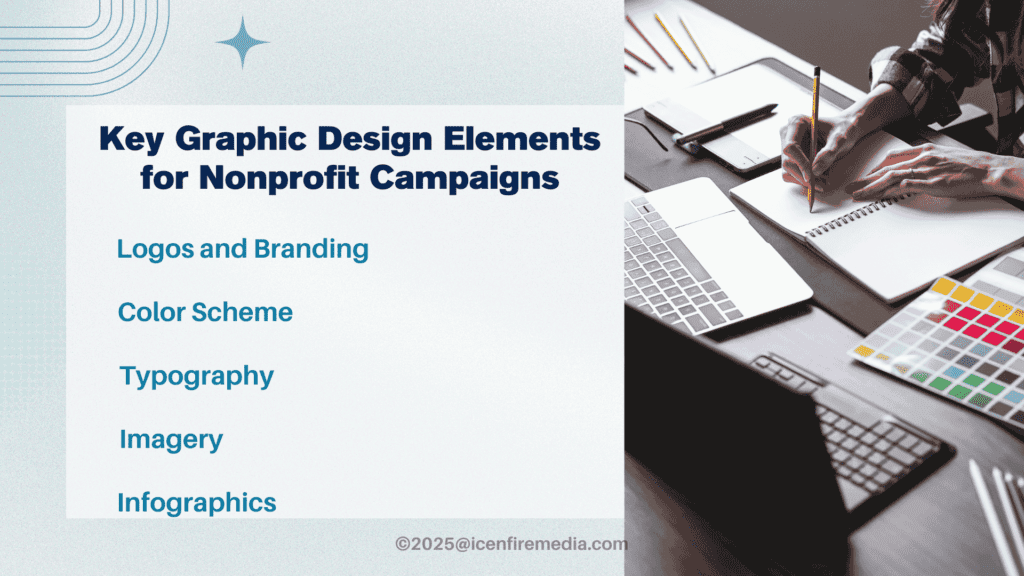
- Logos and Branding: A strong, recognizable logo is the cornerstone of your brand. It should be versatile and reflect your organization’s values. Your logo will be used across all your materials, from your website to your social media profiles, so it’s essential to get it right.
- Color Scheme: Colors evoke emotions and should align with your brand’s message. Consistent use of colors across all materials helps in brand recognition. For example, a nonprofit focused on environmental conservation might use shades of green to symbolize nature and growth.
- Typography: Fonts should be legible and consistent. Different fonts can convey different tones – choose one that fits your brand personality. Serif fonts can appear more traditional and trustworthy, while sans-serif fonts can feel modern and approachable.
- Imagery: Use high-quality images that resonate with your audience. Real photos of your work can have a significant impact. People connect with people, so including images of those who benefit from your nonprofit’s efforts can be very powerful.
- Infographics: These are great for presenting data and statistics in an engaging and easily digestible manner. Infographics can help simplify complex information and make it more accessible to your audience.
Graphic Design Strategies for Nonprofit Campaigns
- Storytelling: Use visuals to tell a story. This can make your message more relatable and memorable. Storytelling can humanize your cause and make it more compelling. For instance, sharing the journey of an individual who has been positively impacted by your nonprofit can create a strong emotional connection with your audience.
- Call to Action (CTA): Every piece of design should have a clear CTA. It could be to donate, volunteer, or share information. Make sure your CTA stands out and is easy to understand. Use contrasting colors and bold fonts to draw attention to it.
- Consistency: Ensure all your design materials are consistent in style, color, and messaging. This builds a cohesive brand image. Consistency helps your audience recognize your materials at a glance and reinforces your brand identity.
- Accessibility: Make sure your designs are accessible to everyone, including those with disabilities. Use high contrast and readable fonts. Consider color blindness and ensure your designs are still effective when viewed in grayscale.
- Testing and Feedback: Regularly test your designs with your audience and seek feedback. This can help in making improvements. A/B testing can be a valuable tool to determine which design elements resonate most with your audience.
Tools and Resources for Nonprofit Graphic Design
- Canva: A user-friendly tool with pre-made templates that are great for non-designers. Canva offers a range of free and paid templates for social media graphics, posters, presentations, and more. It’s an excellent resource for nonprofits with limited budgets.
- Adobe Spark: Offers various templates for creating social media graphics, posters, and more. Adobe Spark allows you to create professional-quality designs with ease, and it’s particularly useful for creating engaging social media content.
- Piktochart: Ideal for creating infographics and reports. Piktochart’s drag-and-drop interface makes it easy to create visually appealing infographics, even if you have no design experience.
- GIMP: A free alternative to Photoshop for more advanced design needs. GIMP is a powerful, open-source image editor that can handle complex design tasks, making it a great option for nonprofits with more advanced needs.
- Unsplash: A source of high-quality, free-to-use images. Unsplash offers a vast collection of high-resolution photos that can be used in your designs, helping you create visually striking materials without the cost of hiring a photographer.
Common Mistakes Nonprofits Should Avoid
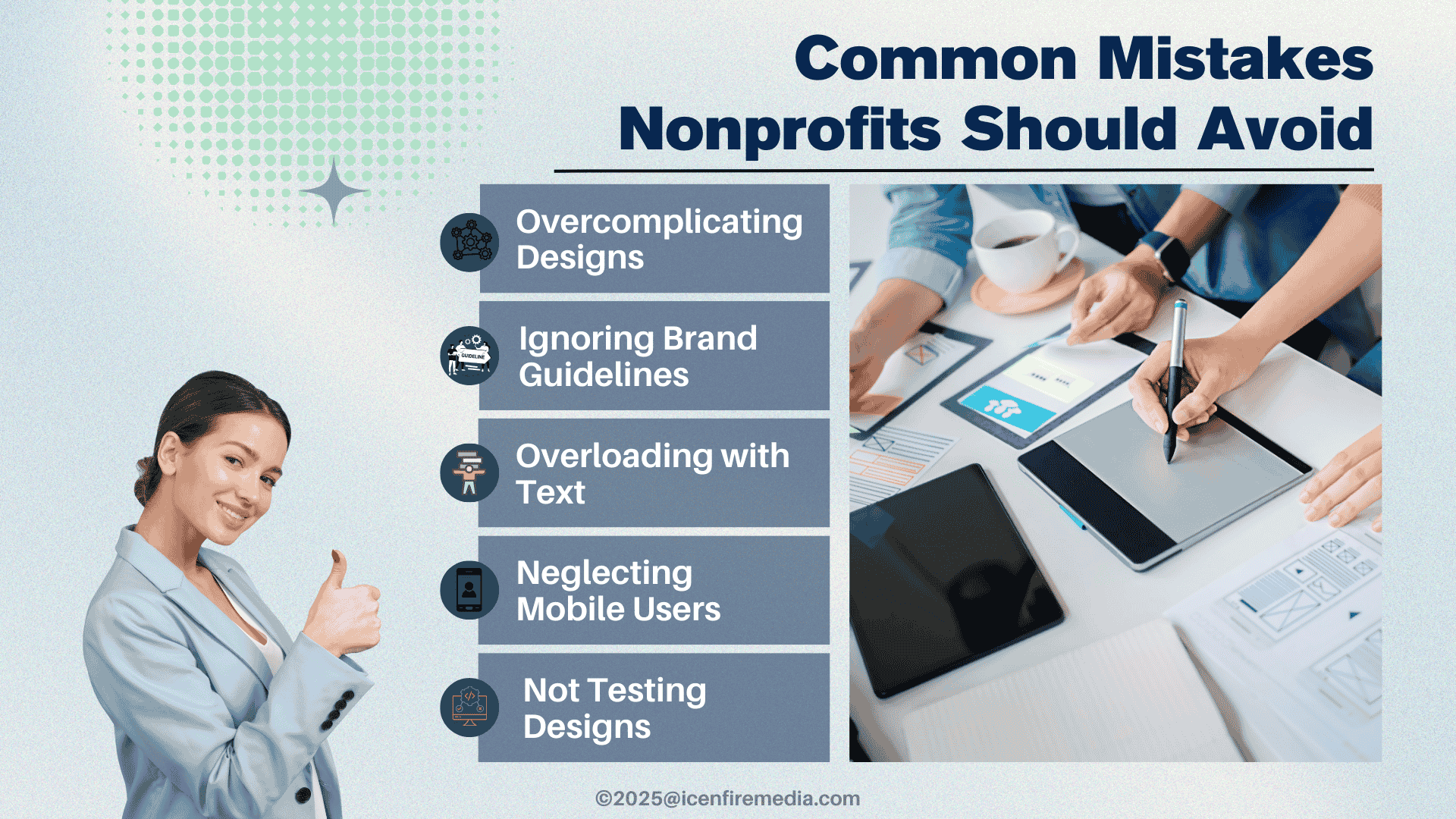
- Overcomplicating Designs: Simplicity is key. Avoid cluttered designs and focus on clear, concise messaging. A clean, straightforward design is more likely to capture and hold your audience’s attention.
- Ignoring Brand Guidelines: Consistency in design helps in building a strong brand. Stick to your brand guidelines. Ensure that all your materials align with your brand’s visual identity, including colors, fonts, and logos.
- Overloading with Text: Visuals should complement the text, not overwhelm it. Keep text to a minimum. Use bullet points and short paragraphs to make your content more digestible.
- Neglecting Mobile Users: Ensure your designs are mobile-friendly as many users will access your content on their phones. Test your designs on different devices to ensure they look good and are easy to navigate on both desktop and mobile.
- Not Testing Designs: Always test your designs to see how they perform and make necessary adjustments. Seek feedback from your audience and make changes based on their input. This will help you create more effective materials over time.
Examples of Successful Nonprofit Campaigns
Case Study 1: Charity: Water
Charity: Water’s branding is a perfect example of how graphic design can drive a nonprofit’s mission. Their use of clean, powerful visuals and compelling stories has helped them raise millions for clean water initiatives worldwide. Their website and social media channels are filled with high-quality images and videos that effectively communicate their impact and mission. They use a consistent color scheme and typography to create a cohesive brand identity that is instantly recognizable.
Case Study 2: World Wildlife Fund (WWF)
WWF’s campaigns are known for their striking visuals and clear messaging. Their use of powerful imagery and minimalistic design effectively communicates the urgency of their conservation efforts. For example, their “Adopt an Animal” campaign features beautiful, emotive photos of animals that need protection, encouraging people to support their cause. WWF also makes excellent use of infographics to present data on endangered species and the impact of their conservation work.
Conclusion
Graphic design is an invaluable asset for nonprofits. It helps in conveying messages more effectively, building trust, and driving engagement. By focusing on key design elements and strategies, nonprofits can create impactful campaigns that resonate with their audience and further their mission. Investing in good graphic design can pay off significantly in terms of increased visibility, engagement, and support. Remember, it’s not just about making things look pretty; it’s about communicating your message in the most effective way possible.

Enhance your nonprofit’s impact with powerful graphic design! Need expert design services? Get in touch with Ice N Fire Media today!
FAQs
A: Look for freelance designers who offer discounts for nonprofits or use tools like Canva and Adobe Spark for DIY design. Many online platforms also connect nonprofits with volunteer designers who are willing to donate their skills. Additionally, some design schools have students looking for real-world projects to build their portfolios, and they may offer their services at a reduced rate or even for free.
A: Minimalism, bold typography, and the use of storytelling through visuals are trending in 2025. Nonprofits are also increasingly using motion graphics and video content to engage their audiences. Another trend is the use of data visualization to present complex information in an easy-to-understand format, which can be especially powerful for showing the impact of your work.
A: Branding is crucial as it helps in creating a consistent and trustworthy image that supporters can recognize and trust. A strong brand can differentiate your nonprofit from others and make it easier for people to remember and support your cause. Consistent branding across all your materials reinforces your message and makes your organization more memorable.